Facial Redness: Causes, Triggers, and How to Calm It

What Is Facial Redness?
Facial redness is a persistent or temporary flushing of the skin, often triggered by genetics, environmental stressors, or an underlying condition like rosacea. That last part is key: rosacea gets most of the attention, but it's far from the only cause. Thinning skin, sun damage, hormonal shifts, stress, and even over-cleansing can all show up on the face as visible redness.
Redness Isn't Just a Rosacea Problem
Redness can show up for a lot of reasons. Common cited triggers include:
- Environmental irritants: Sun exposure, wind, pollution, and temperature extremes can all trigger redness.
- Harsh ingredients or over-cleansing: Stripping products, or cleansing too often, can weaken the skin's natural barrier and lead to irritation.
- Dehydration and thinning skin: As skin loses moisture, and thins with age, it becomes more sensitive and more prone to visible redness.
- Genetics and hormonal shifts: Redness tends to run in families and can be tied to hormonal changes, which is part of why it affects women three times more often than men.
Facial Redness and Age
Age also plays a role. In your late teens and twenties, while you can still experience visible redness like Portia did, the most common skin concerns tend to center around acne and oil control. But somewhere in your 30s, the story can shift: cumulative UV exposure, thinning skin and vascular changes can start turning occasional facial flushing into something more persistent. It's enough that redness actually becomes a top-four skincare priority among customers in their 30s and 40s, the “hot zone” for this concern, before eventually giving way to anti-aging and firming needs in your 50s and beyond.
Does it affect everyone the same way?
It’s important to know, facial redness doesn't affect everyone the same way. Some people can experience mild forms of visible redness, while others are more advanced. Women are three times more likely to be diagnosed with facial redness over men, typically showing redness concentrated on the cheeks and chin, and often linked to hormonal triggers. Men tend to experience it less often, but more severely. Due to stigma surrounding skincare and correction for men, delayed treatment leads to more redness by the time it's addressed. For men, visible redness is more commonly concentrated around the nose and cheeks.
Redness Also Has High Recorded Impacts on Self-Esteem + Confidence
Redness is also more than a cosmetic concern. In a survey of over 600 rosacea patients conducted by the National Rosacea Society, 52% of sufferers said redness negatively affected their self-esteem, and 63% said they'd avoided situations due to discomfort or embarrassment about their redness. Unpredictable "flares" were also cited as a top concern, the lack of control over when their skin might react was more stressful than the redness itself.
That's the kind of everyday impact Portia and the Kind Science team wanted to design for. While Redness Corrector isn't designed to treat rosacea or any medical conditions, it's designed to help you feel more in control of how your skin looks, day to day. It works instantly to visibly reduce the look of redness, is light enough to carry with you and use on the go, and blends in with such a natural, second-skin finish that no one has to know you're wearing anything at all.
Building a Routine Around Redness Corrector
A well-curated routine can also help visibly calm redness while supporting the skin's moisture barrier to promote more even-looking skin over time.
Step 1: Start with a gentle cleanser. Over-cleansing or using a harsh cleanser can strip the skin of essential moisture and lead to more irritation, not less. Kind Science's Gentle Cleanser is formulated with vitamin C from kakadu plum, soothing chamomile, and boswellia serrata to melt away makeup and impurities without drying out the skin.
Step 2: Visibly correct with Redness Corrector. This is the skincare step Portia helped develop: a moisturizer-like, cool-blue formula that instantly counteracts the look of redness, while ceramides, vitamins, and antioxidant-rich botanicals work to strengthen the skin's moisture barrier over time. It's formulated for redness-prone and sensitive skin alike.
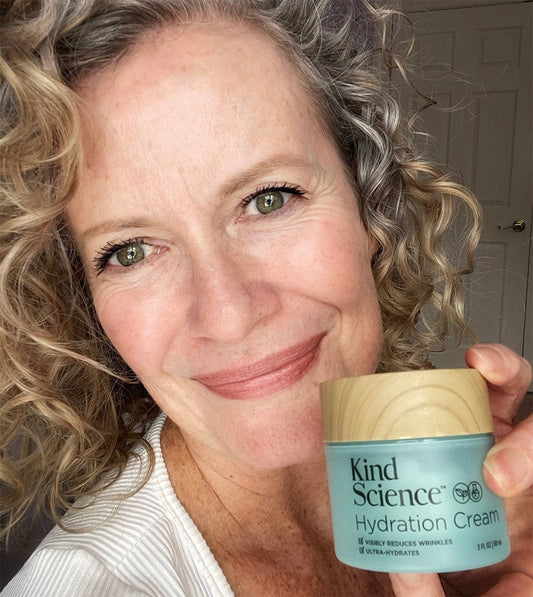
Step 3: Lock in moisture. For extra barrier support, especially for very dry, sensitive, or aging skin, follow with Kind Science's Hydration Cream. Formulated with snow mushroom, sea buckthorn, boswellia serrata, and glycerin, it floods dry skin with hydration so it stays soft, smooth and resilient.
Step 4: Protect with SPF. Sun exposure is a common trigger for redness, and unprotected UV exposure can aggravate redness-prone skin and accelerate the damage that makes it worse over time. Finish your morning routine with a broad-spectrum SPF 30 or higher and make sure to re-apply throughout the day especially if you’re out in the sun during summer time.